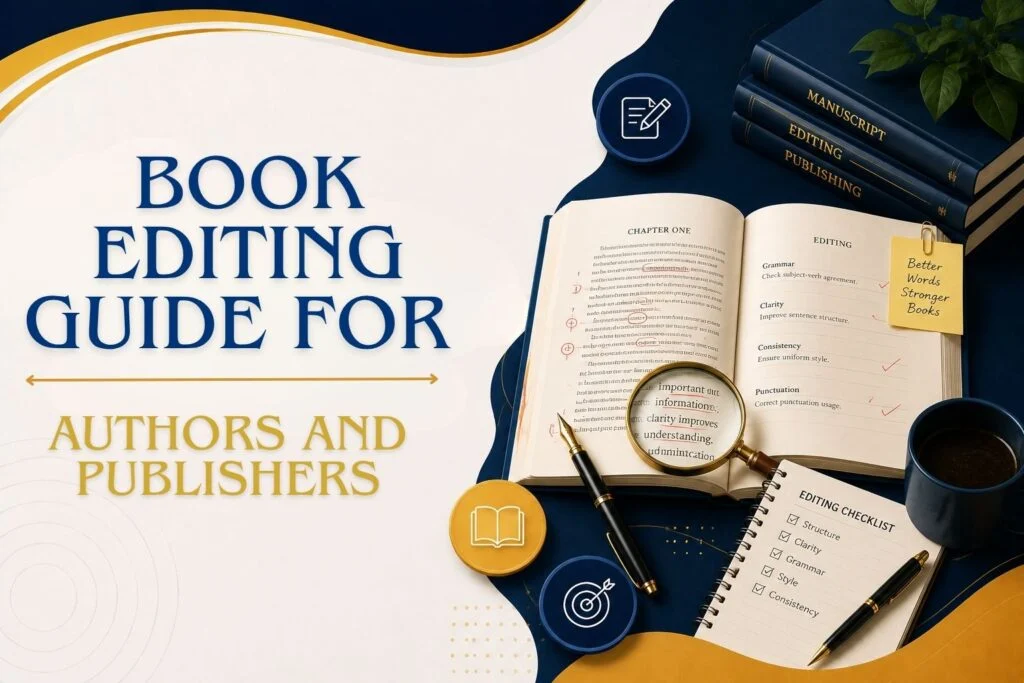

“Editing” is often used as if it describes one service, but book editing actually includes several distinct stages. Choosing the correct type of editing can save money, prevent duplicated work, and significantly improve the final manuscript.
Developmental editing
Developmental editing focuses on the big picture. For nonfiction, that includes organization, logic, audience fit, chapter structure, repetition, missing information, and whether the book delivers on its central promise. For fiction, it includes plot, pacing, character development, conflict, point of view, world-building, and emotional payoff.
A developmental editor may recommend moving chapters, cutting sections, expanding scenes, clarifying the argument, or reworking the opening. Because this stage can produce major changes, it should usually happen before line-level polishing.
Line editing
Line editing focuses on how the writing reads. The editor looks at sentence flow, clarity, tone, word choice, repetition, transitions, and rhythm. It is especially valuable when the structure is already solid but the prose needs to become more engaging or consistent.
Copyediting
Copyediting deals with correctness and consistency. A copyeditor checks grammar, punctuation, spelling, capitalization, usage, factual inconsistencies, and style conventions. They may also flag unclear statements and maintain a style sheet for names, numbers, terminology, and formatting decisions.
Proofreading
Proofreading is the final quality-control stage. It happens after the manuscript has been edited and usually after the interior layout has been prepared. The proofreader looks for lingering typographical errors, formatting problems, incorrect page references, spacing issues, and other defects that could appear in the published edition.
Which service does your manuscript need?
If the story or argument is not working, start with developmental editing. If the structure is strong but the writing is uneven, line editing may be the next step. If the manuscript reads well but needs professional correctness and consistency, copyediting is appropriate. Proofreading should be the final pass, not the first.
Why editing order matters
It makes little sense to perfect punctuation in a chapter that will later be deleted. Working from large issues to small ones is more efficient. A common sequence is developmental editing, revision, line or copyediting, formatting, and proofreading.
Can one editor do everything?
Sometimes, but the stages still need to be separated. Even when one professional provides multiple services, structural revision should be completed before final proofreading. Each stage requires a different kind of attention.
Final takeaway
Professional editing is not simply about finding mistakes. It helps the manuscript communicate more effectively at every level, from the architecture of the book to the final comma. Knowing which stage you need allows you to invest in the work that will make the largest difference.