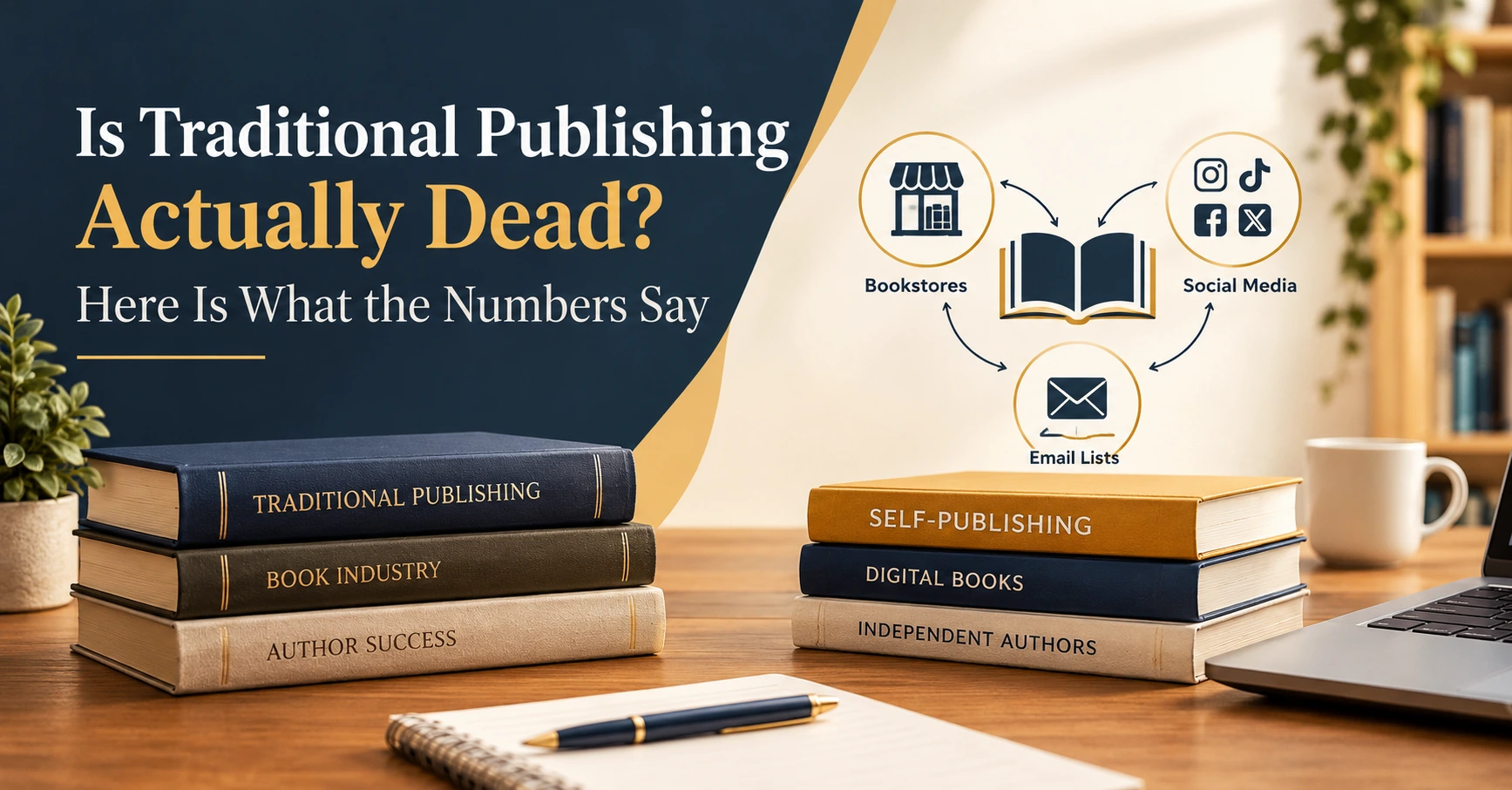
No, traditional publishing isn’t dead, but it’s no longer the only road to readers. That’s what the whole “is traditional publishing dead” panic keeps missing, especially when it hits at midnight after another rejection email. The door is narrow, yet it’s still open, and whether it’s your door is a separate question.
I’ve watched this play out more times than I can count. Someone finishes a manuscript after two years, sends fifty queries, gets a stack of form rejections, and decides the whole industry has collapsed. Usually it hasn’t. The data is messier than the headlines suggest, so let’s go through it properly.
Is Traditional Publishing Dead? Reading the Data Without Getting Fooled
Traditional publishing statistics and book publishing industry statistics often look like they’re arguing with each other. They aren’t, really. They just count different things. A retail tracker logs print copies sold at the till, a publisher’s own report adds up revenue, and another study sweeps in self-published ebooks that never go near a bookstore. No wonder the totals don’t match.
Before you repeat any number, ask what was counted, which formats got included, and what year it covers. It sounds fussy, but a scary headline often loses its bite once you open the original report. The Association of American Publishers’ StatShot Annual report for 2025 is a good example, because it explains where its inputs come from. Plenty of “boom” and “collapse” stories rest on one narrow slice of the market.
My own reading is fairly boring. The big publishers still sell enormous numbers of books, so nothing has vanished. What changed is that they lost their monopoly on polished, professional books, and most readers couldn’t tell you who published their last favorite novel anyway.
How many authors get traditionally published?
A small slice, but nobody can hand you one trustworthy percentage. Agents and publishers don’t release full submission numbers, and most figures online trace back to a couple of surveys or somebody’s guess. If a site gives you a neat percentage and no source, don’t believe it, and don’t share it either.
Here’s what we do know. Your manuscript needs a yes from an agent first. Then an editor has to love it, an acquisitions meeting has to agree, and the marketing team has to believe they can sell it. That’s four separate yeses, and any one of them can sink a good book over list fit or timing.
Publishing Industry Trends 2026 That Matter More Than Any Chart
Skip the sales charts for a minute. A few changes matter more when you’re deciding where your manuscript goes this year.
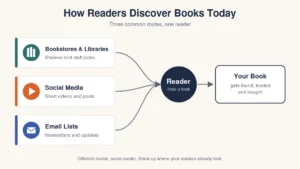
Think about how you found the last book you bought. Odds are a short video, a newsletter or a friend’s post did the job a bookstore table used to do. Reader communities have taken over a lot of that work.
Tools have caught up as well. KDP made it easy to publish a clean-looking book, which is great, except everyone else noticed too. If you’re curious how that process works, our complete guide to Amazon KDP publishing walks through it. Competition is fierce now.
Even traditionally published authors get asked for an audience plan these days. And with ebooks and audiobooks, independent authors can reach formats that were a real headache to get into not long ago.
None of this ends the traditional route. It just narrows the gap between what a publisher can do for you and what you can do alone. The smaller that gap is for your book, the less the “is traditional publishing dead” argument should bother you.
Traditional Publishing vs Self-Publishing: What You’re Actually Trading
The traditional publishing vs self-publishing argument gets heated because people treat it like a team sport. It’s really a trade. Money, speed, control and reach all pull against each other, and neither side wins all four.
Traditional publishing advantages and disadvantages
The good side first. You get an advance and no upfront production bill, plus an editor, a designer, a sales team, and a real chance at bookstores and libraries. Some reviewers and award committees still lean toward publisher-backed books, and for certain careers that matters a lot.
The trade-off? Time, mostly, and control. Going from signing to shelf often takes a year or more, you’ll have limited say over the title, cover and price, and your cut per copy is smaller. The publisher may also hold your rights for a long while.
What self-publishing asks of you
Self-publishing flips most of that. You keep your rights, you keep control, and you usually earn more per copy. But you pay production costs up front and carry the marketing yourself, which surprises a lot of first-timers.
If money is what’s worrying you, read our step-by-step guide to self-publishing a book first. Then check KDP’s eBook royalties page so you’re working with current numbers, not old forum posts.
What a Rejection Letter Is Actually Telling You
Not all rejections say the same thing. A form letter with no comments usually means someone passed quickly, which tells you almost nothing. A two-line personal note, even a curt one, is a different animal. Someone read your pages and cared enough to say something.
Before you give up on agents, read your first ten pages out loud as if you’d never met the author. Where do you get bored? Plenty of manuscripts get passed over because chapter one wanders too long, not because the idea is weak. Fixing that costs less than any publishing model, and a good book editing guide can show you what kind of edit you actually need.
One blunt thought here. Self-publishing shouldn’t be where you hide from feedback. It works best for authors who treat editing as non-negotiable.
Hybrid Publishing: The Middle Road With a Catch
Hybrid publishing sits between the two models. You pay for some or all of production, the company supplies editing, design and distribution, and you typically keep a bigger share of sales. Done honestly, it’s a sensible compromise.
The catch is that “hybrid” has become a loose label. Some outfits using the word behave like vanity presses. They charge a lot, deliver little, and hope you won’t ask questions.
So ask. Is the pricing itemized? Do you keep your rights? Is distribution real, or just a listing in a catalog? Can they show you books that truly sold? A vague answer to any of those is your cue to leave, however nice the sales call felt. For a stricter benchmark, the Independent Book Publishers Association publishes its Hybrid Publisher Criteria for free.
Three Authors, Three Different Calls
The authors below are made up, but the situations are common.
Rachel writes literary fiction, where bookstore presence, reviews and prizes carry real weight. So she’s spending a year polishing her pitch and querying agents rather than uploading the draft herself. Slow? Yes. But it fits what her book needs.
Mark is a business coach with a decent email list, and he wants a book as a credential and a lead tool in about six months. A long query process doesn’t suit that. He hires an editor and a designer and publishes independently.
Emily had forty rejections on a cozy mystery and was ready to quit. Instead she paid an editor, rewrote her first three chapters, and sent out a new query with a sharper hook. Two agents asked to see the full manuscript. No deal yet, but she now knows the book was fixable, not doomed.
Same industry, three goals, three different answers. Most online arguments skip that part.
Is Traditional Publishing Worth It? A Three-Question Check
Instead of asking which model is better, ask what your book has to do. Write your answers down, because they’re harder to fudge on paper.
- What’s the main goal? Prestige and shelf space lean traditional. Income, speed and control lean independent.
- How long can you wait? If the book has to be out in a few months, forget the traditional pipeline. It simply won’t move that fast.
- Do you have an audience already? One helps in either model, so start building it now.
Answer honestly, even if you don’t love what you hear. Lots of authors say they want prestige, then realize halfway through that what they really want is readers, soon.
Is traditional publishing dead for your genre?
Genre matters here more than people admit. Romance and fantasy have huge self-published communities. Literary fiction and narrative nonfiction usually lean on traditional gatekeepers for reviews and shelf space. That’s a rough guide, not a rule.
Here’s a quick test that takes ten minutes. Look up five recent books like yours and note how each one was published. It’ll tell you more than most trend articles, and it’s free.
Your Next Step: Decide With Evidence, Not Fear
So, is traditional publishing dead? No, it’s one option among several, and it wins only when it fits your goals. Why build your writing life around the loudest headline when a few small checks can give you a real answer?
This week, do four things. Write down what you want the book to do, in one sentence. Find five books similar to yours and note how each was published. Pick a querying deadline, and decide today what you’ll do when it passes. Then sketch a plan B for independent publishing with a budget you can actually afford, using our guide on how to publish a book as a starting map.
If you’d like a second opinion on which path suits your manuscript, get in touch with our team. You can also see how independent publishing works on our book publishing services page.